Prof. Ya-Tin Lin Wins 2nd Prize in Prof. Juei-Hsing Tsai Excellent Research Award for Uncovering a New Brain-Metabol
Prof. Ya-Tin Lin Wins 2nd Prize in Prof. Juei-Hsing Tsai Excellent Research Award
for Uncovering a New Brain-Metabolism Regulatory Mechanism
Diabetes and obesity remain major global health challenges, and researchers are increasingly looking beyond peripheral organs such as the pancreas, liver, muscle, and adipose tissue to better understand how metabolic diseases develop and progress. The brain, particularly the hypothalamus, has emerged as a key regulatory center for energy balance, blood glucose control, and systemic metabolism. However, the neural mechanisms linking brain signaling to metabolic dysfunction are still not completely clear.
A recent study led by Assistant Professor Ya-Tin Lin at the Graduate Institute of Metabolism and Obesity Sciences, College of Nutrition, Taipei Medical University (TMU), provides new insight into this field. Her research identifies a hypothalamic neuropeptide pathway that may contribute to central insulin resistance and systemic metabolic imbalance, offering a new perspective on the relationship between the brain and metabolic disease.
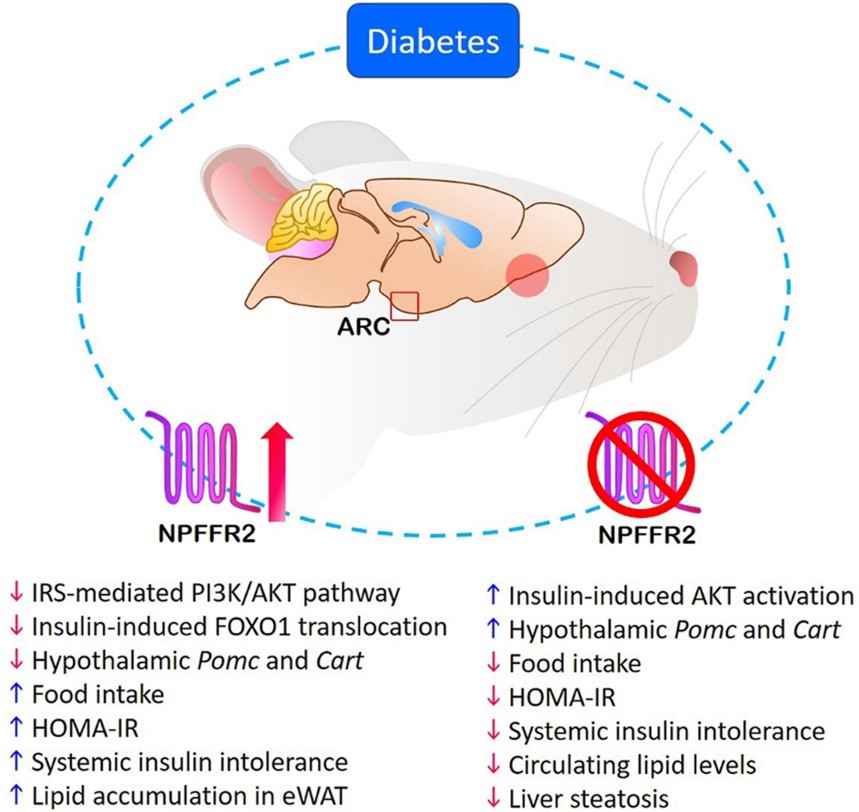
Hypothalamic arcuate nucleus NPFFR2 signaling impairs central insulin sensitivity and exacerbates diabetes-related metabolic dysregulation in mice, suggesting that its activation exerts a negative modulatory effect on centrally mediated metabolic parameters.
With these research findings, Assistant Professor Lin received 2nd Prize in the 9th (2025) Professor Juei-Hsiung Tsai Excellent Research Award. The award-winning study, “Hypothalamic NPFFR2 attenuates central insulin signaling and its knockout diminishes metabolic dysfunction in mouse models of diabetes mellitus,” was published in the international journal Clinical Nutrition (2024 Impact factor 7.4; ranked in the top 7.1% in NUTRITION & DIETETICS).
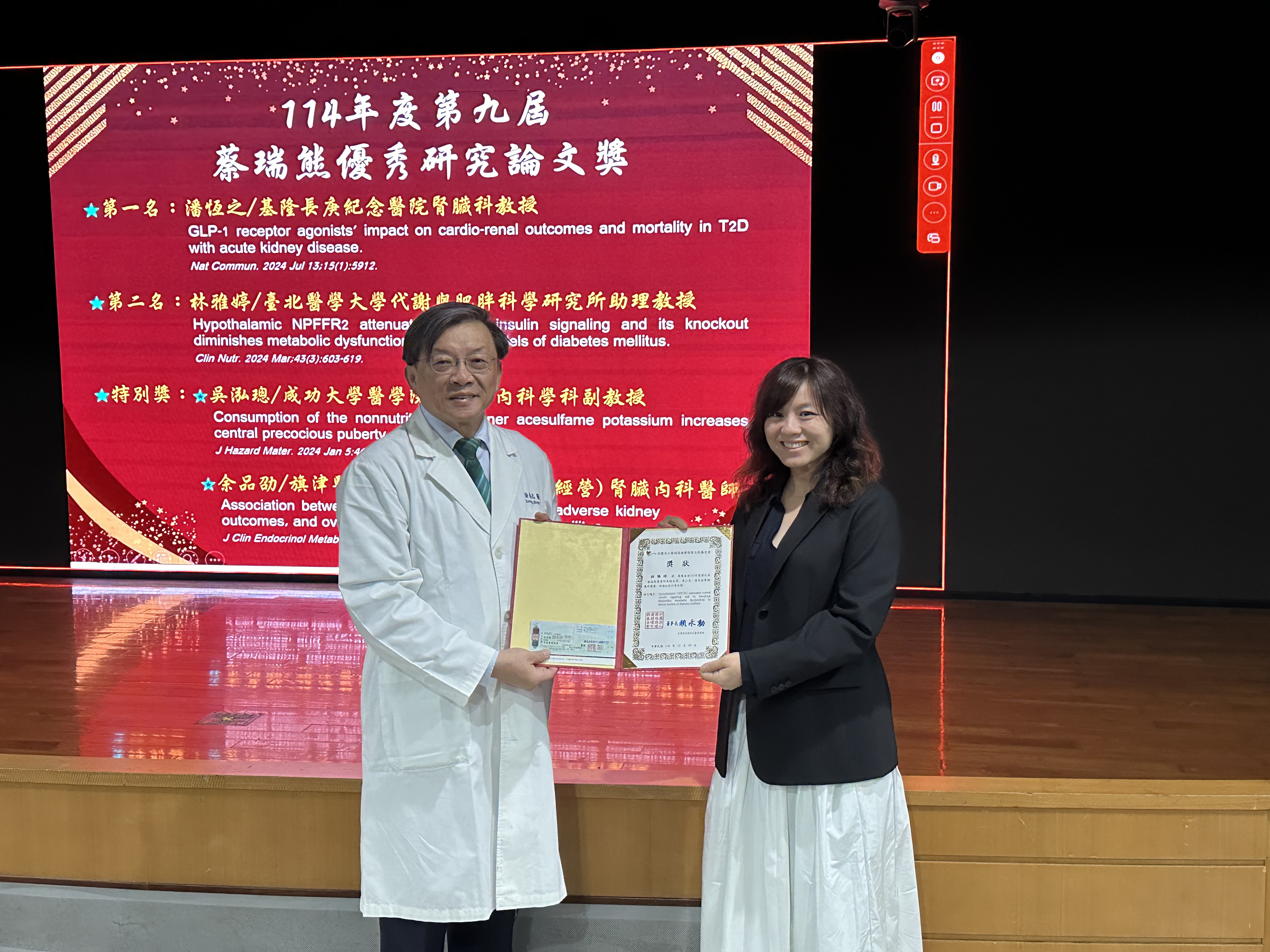
Image: Dr. Shang-Chih Huang, Chairman of the Tsai Jui-Hsiung Health Care and Education Foundation (left),
presented the award to Assistant Professor Ya-Ting Lin (right).
The study focuses on neuropeptide FF (NPFF) and its receptor, neuropeptide FF receptor 2 (NPFFR2), in the hypothalamus. The findings show that this neuropeptide system plays an important role in regulating the sensitivity of neuronal insulin signaling pathways. When NPFFR2 is abnormally activated in the arcuate nucleus of the hypothalamus, central insulin signaling may be impaired, worsening insulin resistance in the diabetic brain and negatively affecting systemic glucose and lipid metabolism.
Using mouse models of diabetes, together with molecular, cellular, and physiological approaches, the research team demonstrated that deletion of NPFFR2 attenuated both central and peripheral metabolic dysfunction. These findings suggest that NPFFR2 may be a key factor in the progression of metabolic diseases such as diabetes and obesity.
The research also highlights the active role of the brain in metabolic regulation. Rather than merely passively receiving information about the body’s metabolic state, the brain serves as a central hub that helps coordinate energy balance and blood glucose control. Understanding how neural signals influence peripheral metabolism may therefore open new directions for the prevention and treatment of chronic metabolic disease.
Looking ahead, the NPFFR2 pathway may serve as a potential target for future drug development or nutritional intervention strategies. By improving central insulin resistance, such approaches could create new opportunities for managing diabetes, obesity, and related metabolic disorders.
- Original Article: Hypothalamic NPFFR2 attenuates central insulin signaling and its knockout diminishes metabolic dysfunction in mouse models of diabetes mellitus
- Keywords: Central insulin resistance; Diabetes mellitus; Hypothalamic arcuate nucleus; Metabolic symptoms; NPFFR2; Neuropeptide FF
- Author Profile: Ya-Tin Lin, Assistant Professor, Graduate Institute of Metabolism and Obesity Sciences, College of Nutrition